
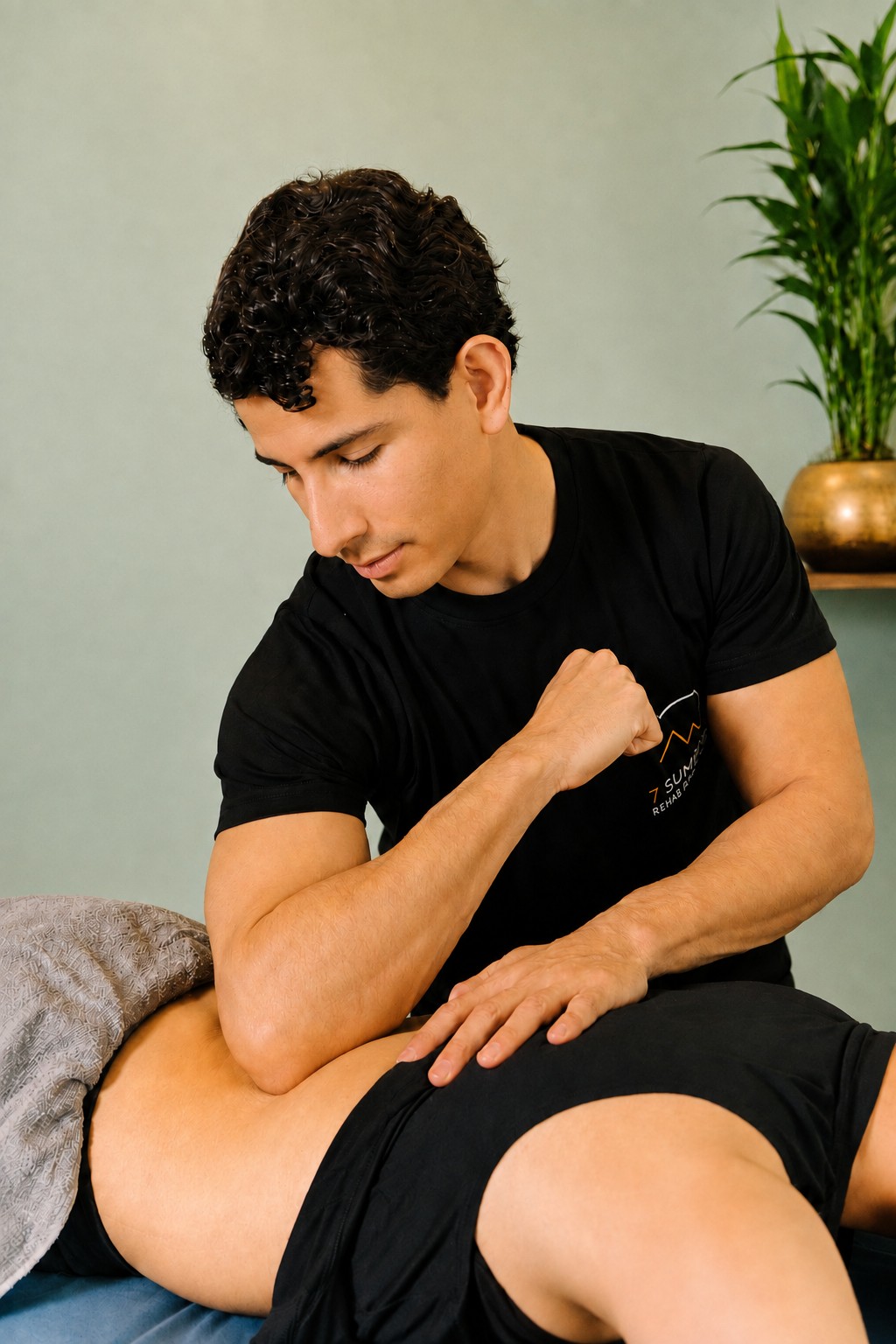
Clinical soft tissue treatment within a rehab-focused clinic
This is skilled, hands-on RMT, with clinical purpose behind every treatment choice.
Treatment is guided by what you are feeling and how it is affecting the way you move, recover and feel day to day. That might mean addressing persistent tension, soreness, guarding or areas that simply feel overworked.
The focus is clinical, but that does not mean relaxation has no place. Treatment can still help your body settle, but the work itself is never on autopilot. Pressure, pace and focus can shift based on what your RMT is finding and how your body responds.

Looking Beyond the Tight Area
Some people book RMT because one area feels tight, sore or overworked. A stiff shoulder, aching back, sore hip or heavy legs can be reason enough to come in.
But that one area is not always the whole story. What you are feeling may be influenced by an injury, a flare-up, training load, work demands, stress, travel or something that has been building over time.
Treatment is shaped around that bigger picture. That may mean firm, focused pressure where deeper work is useful, a more gradual approach where tissue is guarded or irritated, or attention to related areas that may be contributing to the problem.
Our goal is not to follow a set massage routine. It is to make the treatment relevant to what brought you in.
When RMT Makes Sense
You do not need a new injury or a specific diagnosis to have a reason to book RMT.
> When the same issue keeps coming back
If a familiar area repeatedly tightens, aches or becomes noticeable again, treatment can look at what may be keeping that pattern active rather than simply working on the sore spot.
> When you’re recovering from an injury
RMT can help address the soreness, guarding and soft tissue tension that often come with injury, flare-ups or the gradual return to normal activity.
> When your body is carrying more load than usual
A harder block of training, physical work, travel, long days or a sudden change in activity can leave certain areas feeling overworked and slower to recover.
> When stress starts showing up in your body
Stress, fatigue and poor recovery can show up physically as tension, tightness or a body that never quite seems to settle.
> When you want to stay ahead of a familiar pattern
For some people, regular RMT is less about fixing a new problem and more about keeping recurring tension manageable before it becomes harder to settle.
Two approaches, one direction
The advantage of having RMT and physiotherapy in the same clinic is not simply that both services are here. It is that they can connect when they need to.
You may come to Seven Summits for RMT and never need anything else. But if what you are dealing with would benefit from a broader musculoskeletal assessment or a more active rehab approach, physiotherapy can take a closer look at joint function, movement, strength and how your body is tolerating load.
If both approaches become part of your care, your RMT and physiotherapist can communicate directly about what they are finding and where each treatment can contribute. You do not have to act as the go-between, and your care is less likely to feel like two separate plans moving in different directions.
There is a practical benefit too. Appointments can often be arranged back to back, making it easier to coordinate both treatments in one visit.
RMT remains a standalone service. The difference is that if your care ever needs another layer, it is already connected.
Registered Massage Therapy rates
We direct bill to major insurance companies and for ICBC claims.